
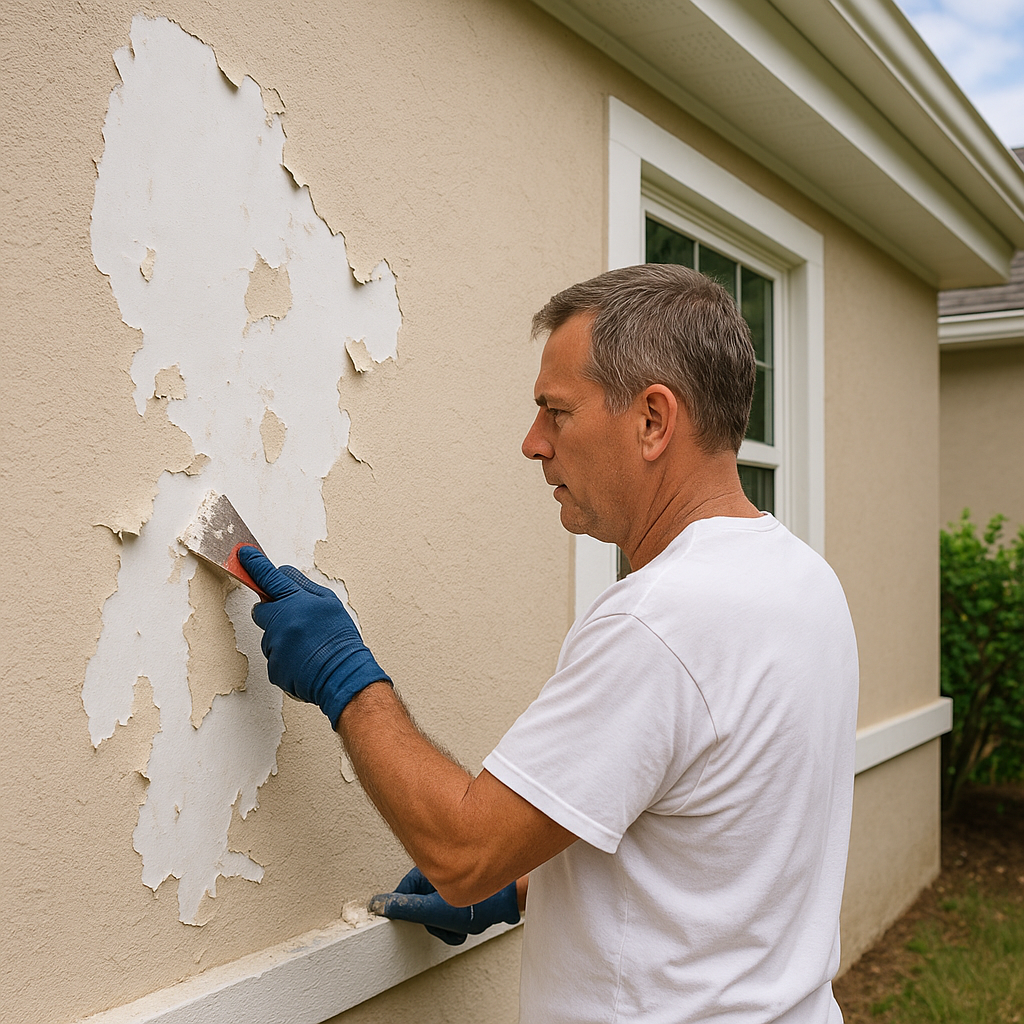
Orlando’s Climate Challenges Every Paint Job
Between blistering sunlight, year-round humidity, and frequent rain, Orlando’s climate is as tough on paint as it gets. Even high-quality coatings can start peeling, fading, or cracking if not applied or maintained properly.
Whether your home’s exterior is stucco, wood, or fiber cement, these issues aren’t just cosmetic — they’re warning signs.
If ignored, they can lead to moisture damage, wood rot, and costly repairs.
In this guide, we’ll explain how to identify, repair, and prevent the most common paint problems faced by Orlando homeowners, plus professional insights from local painters who understand Florida’s unique weather conditions.
1. Peeling Paint: The Most Common Orlando Paint Problem
Peeling occurs when paint loses adhesion to the surface — one of the earliest signs your home needs attention.
What Causes Peeling in Orlando Homes
-
Moisture infiltration: High humidity and rain seep into cracks and weaken paint adhesion.
-
Improper surface prep: Failing to clean or prime before painting traps dirt or oils beneath the new coat.
-
Incompatible paints: Using latex over oil-based paint without proper priming.
-
Sun exposure: The intense Florida sun dries paint too quickly, causing surface cracking and lift-off.
How to Fix Peeling Paint
-
Scrape and sand: Remove all loose and flaking paint with a wire brush or scraper.
-
Clean the surface: Pressure wash or wipe with a TSP (trisodium phosphate) cleaner to remove mildew and chalking.
-
Repair and caulk: Fill cracks or gaps, especially around windows and trim.
-
Prime: Use a bonding primer suitable for your surface — acrylic primers are best for Orlando’s humidity.
-
Repaint: Apply two coats of 100% acrylic exterior paint designed for moisture resistance.
Pro Tip:
Repaint in Orlando’s dry season (November–April) when humidity levels are lower, allowing paint to cure correctly.
2. Fading Paint: Sunlight’s Silent Damage
Color fading is one of the most visible effects of Orlando’s year-round UV exposure. The stronger the sun, the faster pigments break down.
Why Paint Fades in Florida
-
UV radiation: Breaks down color molecules, especially reds, blues, and dark tones.
-
Low-quality paint: Cheaper paints lack UV-blocking additives.
-
Overly porous surfaces: Unsealed stucco absorbs paint, causing uneven fading.
-
Improper tinting or mixing: Paints not designed for Florida sunlight fade faster.
How to Fix Faded Paint
-
Wash the surface: Remove chalking (a white, powdery residue) with a mild cleaner or pressure washer.
-
Prime: Apply a color-locking or sealing primer to stabilize the surface.
-
Repaint: Choose high-quality exterior paint formulated for UV resistance (e.g., Sherwin-Williams Duration or Benjamin Moore Aura).
-
Pick lighter shades: Light colors reflect sunlight better and fade more slowly.
Prevention Tips
-
Select satin or semi-gloss finishes — they reflect light more evenly than flat paints.
-
Avoid painting during direct midday sun; early morning or late afternoon is best.
-
Wash your exterior annually to remove dirt and pollutants that accelerate fading.
3. Cracking Paint: A Warning Sign of Structural Stress
Cracking occurs when paint loses flexibility — a common problem in homes exposed to constant heat and expansion.
Why Paint Cracks in Orlando
-
Temperature fluctuations: Surfaces expand and contract daily.
-
Low-quality paint: Lacks the elasticity to stretch without breaking.
-
Improper thickness: Applying too thin or too thick a coat.
-
Moisture trapped underneath paint.
How to Fix Cracked Paint
-
Identify the severity:
-
Hairline cracks: Sand lightly and repaint.
-
Deep cracks: Scrape, sand, and prime before repainting.
-
Extensive cracking: Full repaint is required.
-
-
Repair damaged areas: Fill with elastomeric caulk or patching compound for stucco.
-
Prime and repaint: Use flexible 100% acrylic or elastomeric paint that expands with temperature.
Pro Tip:
Cracks on stucco are common in Florida. A high-build elastomeric coating can bridge hairline cracks and create a waterproof seal.
4. Bubbling or Blistering Paint
Bubbles (blisters) form when moisture or air gets trapped under the paint film — a frequent problem after Orlando’s heavy rain or during humid summers.
Causes
-
Painting over damp or hot surfaces.
-
Trapped moisture due to poor ventilation.
-
Using incompatible primers or paints.
-
Sun heating dark paint colors too quickly after application.
Fixing Bubbles
-
Pop and scrape all blisters once the surface is dry.
-
Sand smooth to remove any raised areas.
-
Prime with vapor-permeable primer to allow moisture to escape.
-
Repaint during moderate weather (70–85°F, humidity under 70%).
Avoid painting directly under the Florida midday sun — rapid heating can create bubbles within hours.
5. Mold and Mildew Growth
Orlando’s humid environment encourages mold growth, especially on shaded walls or areas with poor drainage.
How to Identify It
-
Black, green, or gray spots forming in patterns.
-
Slippery or discolored film on paint.
-
Common around gutters, foundations, and north-facing walls.
How to Remove and Prevent Mold
-
Wash with a mildewcide solution (1 part bleach, 3 parts water).
-
Rinse thoroughly and let dry.
-
Apply a mildew-resistant primer before painting.
-
Use mold-inhibiting exterior paint, especially for stucco or masonry.
-
Improve drainage and trim vegetation that shades walls.
Note: Always wear protective gear when cleaning mold to prevent respiratory irritation.
6. Chalking: The Dusty Residue You Shouldn’t Ignore
Chalking looks like a white powdery layer that comes off when you rub your hand against the wall.
While common in older Orlando homes, excessive chalking signals that the paint is breaking down.
Causes
-
Sun and rain degrading the paint resin.
-
Poor-quality paint with low binder content.
-
Lack of primer on porous surfaces like stucco.
How to Fix It
-
Pressure wash to remove loose chalk.
-
Apply a binding primer or sealer to lock remaining residue.
-
Repaint using high-grade acrylic exterior paint.
Prevention: Choose paints with high pigment volume concentration (PVC) and UV stabilizers for better weather resistance.
7. Efflorescence: The White Crust on Masonry
Efflorescence occurs when water migrates through concrete or stucco, bringing salts to the surface that crystallize as white deposits.
Causes
-
Trapped moisture behind paint.
-
Poor drainage or leaky gutters.
-
Unsealed masonry surfaces.
Fix
-
Brush or wash off deposits using a stiff bristle brush.
-
Let the wall dry for several days.
-
Apply a masonry sealer or water-repellent primer before repainting.
-
Ensure exterior drainage systems are working properly.
8. Paint Stains and Rust Marks
Orange or brown streaks near nails, gutters, or window frames often indicate rust or metallic leaching.
How to Remove Them
-
Sand or wire-brush rusted metal surfaces.
-
Prime with a rust-inhibiting metal primer.
-
Apply exterior-grade metal paint for protection.
-
Replace rusted fasteners with stainless steel or coated screws.
9. Preventing Paint Problems Before They Start
Most paint failures in Orlando stem from improper surface prep or cheap materials.
Here’s how to make your next paint job last through Florida’s climate.
A. Invest in High-Quality Paint
Use premium 100% acrylic or elastomeric coatings designed for Florida homes. These resist UV, mold, and cracking far better than standard latex.
B. Prep Properly
-
Pressure wash before painting.
-
Repair stucco cracks and caulk joints.
-
Prime all bare areas.
C. Time It Right
Paint during Orlando’s dry season (November–April) for optimal curing and adhesion.
D. Hire Experienced, Licensed Painters
Local Orlando painting companies understand humidity control, surface prep, and product selection better than general contractors.
10. How Professionals Address These Issues
Reputable house painters in Orlando FL use specialized tools and techniques to combat local conditions:
-
Moisture meters to check wall dryness before painting.
-
Elastomeric coatings for waterproof stucco protection.
-
Mildewcide additives for long-term mold prevention.
-
UV-resistant colorants for lasting vibrancy.
-
Back-rolling technique for deeper paint penetration.
Professionals also provide warranties, ensuring your investment remains protected against premature failure.
11. When It’s Time to Repaint Entirely
If your paint issues cover more than 30–40% of the surface or multiple sides of your home, it’s usually best to start fresh.
A full repaint includes stripping loose paint, repairing surfaces, priming, and applying two coats of premium paint.
Average lifespan after repainting with top-quality materials:
-
Stucco: 8–10 years
-
Wood: 5–7 years
-
Fiber cement: 10–12 years
12. Maintenance Tips for Long-Term Protection
Keep your exterior looking beautiful year-round with these Orlando-specific maintenance habits:
-
Pressure wash once per year to remove mildew.
-
Inspect caulking every six months.
-
Repaint trim or touch-up exposed areas early.
-
Clean gutters regularly to avoid water streaks and damage.
-
Trim plants away from walls to improve air circulation.
By staying proactive, you can prevent 90% of common paint problems before they start.
A Fresh Coat Is More Than Just Color
In Orlando’s hot, humid, and storm-prone climate, paint does far more than beautify — it protects your home from the elements.
Peeling, fading, and cracking are early warning signs that it’s time for professional care.
By addressing these issues quickly — and repainting with the right products and prep — you’ll protect your home’s structure, enhance its curb appeal, and save thousands on future repairs.
When in doubt, call a trusted, licensed, and insured painting company in Orlando to inspect your home and recommend the best path forward.
Because in Florida, paint isn’t just decoration — it’s defense.